
Michigan Concealed Pistol License
Michigan CPL Training, Taught One Student at a Time
Private and small-group Concealed Pistol License training across Oakland County and Metro Detroit. You don't need shooting experience to start — because the session is yours, the fundamentals are taught as part of the course rather than assumed.
The honest version
Not all CPL training is created equal.
Michigan sets a training standard, and every certified course clears it. That is the floor, and it is genuinely all the state asks for. What varies enormously is what happens above the floor.
In a class of forty, the instructor is managing a room. Questions get deferred, the range rotation is a queue, and the person who has never held a pistol before gets the same forty seconds of individual attention as the person who has been shooting for twenty years. Nobody is doing anything wrong. The format simply has limits.
We're not trying to move you through the minimum. The goal is to meet Michigan's requirements while you build genuine understanding and competence — and because the session is private, we can spend time on whatever you need without holding anyone else up.
Who it's for
Private CPL training fits a wider range of students than most people expect.
First-time shooters
You don't need any experience to start. Private instruction means the fundamentals get taught properly, at your pace, as part of the course.
Firearm owners ready to certify
You already shoot and you want the license. We'll spend the time on law, carry considerations and sharpening what you've got.
Anyone who'd rather not learn in a crowd
No room of forty, no queue for the firing line, no questions you feel awkward asking.
Couples and small private groups
Certify together, even when your experience levels are nowhere near the same.
People who want more than a checkbox
The statutory minimum is where we start, not where we stop.
Anyone who's been putting it off
Usually because the big Saturday classes felt like a conveyor belt. This isn't that.
Never fired a handgun?
You're in the right place. Start here.
A lot of people assume they need to learn to shoot somewhere else first, then come back for the CPL class. That's true of a large group course — it has to move at the pace of the room, so it quietly assumes you arrive already knowing how to run a pistol.
Private instruction doesn't have that constraint. When it's one student or one couple, the fundamentals simply become part of the session. Depending on what you need, that can include safe handling, how the firearm actually works, grip, stance, sight alignment, trigger control, basic marksmanship and range procedure — taught deliberately rather than squeezed into a rotation.
So no, you don't need experience to begin. Tell us where you're starting from when you get in touch and we'll build the session around it.
What we won't do is sign off on a certification a student hasn't met the requirements for. That's a different thing entirely from being new — beginners are exactly who private instruction is built for.
How it works
From first call to county clerk.
We handle the training and certification. Michigan handles the license — that distinction matters, and we keep it clear.
Start with a conversation
We talk through your experience, whether a CPL is the right next step, and what format suits you — individual, couple or small private group.
Complete the training
Classroom instruction covering Michigan law, safe handling, defensive considerations and the responsibilities that come with carrying, plus the required range component.
Live fire and range time
Michigan's training requirement includes a range component with live fire, in addition to the classroom hours. This is the part no online course can substitute for.
Receive your certificate
You get the course completion certificate Michigan requires with your application.
Apply through your county clerkHandled elsewhere
Applications, fingerprinting and fees go through the clerk in your county of residence. The clerk — not us — handles issuance.
What's covered
Inside the course.
Michigan law sets a minimum subject list. We teach the U.S. LawShield Michigan CPL curriculum, which is organized into nine modules and goes well past that minimum — the two largest blocks are handgun fundamentals and the law around using force.
Worth being precise about: the statute in MCL 28.425j sets the floor. Much of what follows is curriculum and instruction that goes beyond it, not a separate legal requirement.
Request private CPL training- The application process end to end — eligibility, your county clerk, fees and renewal
- Federal restrictions and the places firearms are prohibited under federal law
- Michigan's own restricted locations, and where they differ from the federal list
- Traveling with a firearm, including what changes when you cross a state line
- The law around using force — the single largest legal block in the course
- Personal safety, awareness and managing a confrontation before it escalates
- Handgun fundamentals — how the pistol works, carrying it, storing it safely
- Shooting fundamentals — grip, stance, sight alignment and trigger control
- Live fire on the range, with a proficiency evaluation
- Course completion documentation for your county clerk
Clear boundaries
What our training does — and does not do.
What our training does
- Delivers Michigan's required pistol safety training
- Includes classroom instruction and the range component
- Produces the course completion certificate you submit
- Adapts pace and depth to the student in front of us
What it does not do
- Does not issue your CPL — your county clerk does
- Does not include county application fees or fingerprinting
- Does not certify a student we don't believe is ready
- Does not make you legal to carry in other states automatically
On hybrid formats
After certification
Your CPL class can be the start of your training, not the end of it.
The certificate proves you completed what Michigan requires. It doesn't make anyone a good shooter, and it was never designed to.
Here's the pattern we see constantly: someone certifies, applies through their county clerk, waits for the license, and doesn't touch a firearm again until it arrives. Then they start carrying — with whatever skill they had on the day of the class, several weeks earlier.
The waiting period is the most useful training window you'll ever get. You've just been taught the fundamentals, you know exactly which parts felt shaky, and there's no deadline pressure. A session or two in that gap does more for your actual competence than the certification did.
- 01
Certify
Complete your CPL training and receive the certificate.
- 02
Apply
File with your county clerk and start the waiting period.
- 03
Keep training
Use the gap. Sharpen what the course exposed while it's fresh.
- 04
Build from there
Defensive fundamentals, home considerations, ongoing practice.
Free resource
Keep learning after the class.
A student reference from U.S. LawShield, available through our instructor relationship. Free, and yours to keep. We share it because the questions it covers keep coming up long after a course ends — not because it asks anything of you.
Published by U.S. LawShield. Opening it doesn't sign you up for anything.
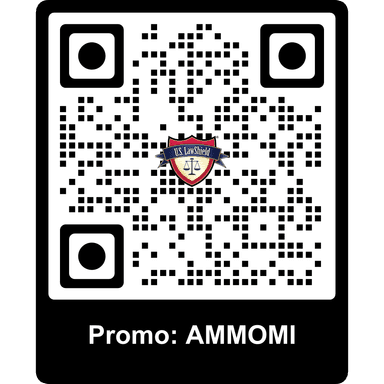
Scan to open it on your phone
After the decision
Carrying raises a question the certificate doesn't answer.
Your CPL class covers Michigan law and what justifies using force. What it can't cover, in the time available, is the process that follows — investigation, charging decisions, and the civil claim that can arrive much later.
Some students look into a legal-defense membership at this point. It's worth understanding before you decide either way.
U.S. LawShield is an independent company. We're one of their instructor partners and may be compensated for referrals.
Quick answers
Michigan CPL, in plain terms.
Can a beginner take a Michigan CPL class?
Yes. You do not need prior shooting experience to begin private CPL training. In a private session the instructor can teach safe handling, grip, stance, sight alignment and trigger control as part of the course, rather than assuming you already have them.
Do I need firearms experience before Michigan CPL training?
No. A large group class effectively assumes you arrive knowing how to run a pistol, because it has to move at the pace of the room. Private instruction doesn't — the fundamentals become part of the session, built around where you're starting from.
What does Michigan require for a CPL?
A pistol safety training course meeting Michigan's statutory requirements — including classroom instruction and a live-fire range component — followed by an application through your county clerk.
Does Michigan CPL training include live fire?
Yes. Michigan's training requirement includes a range component with live fire in addition to classroom instruction.
Is there a written test for a Michigan CPL?
Not one administered by the state. Michigan does not require applicants to sit a separate state written CPL exam. A qualifying course must still cover the subjects Michigan law specifies, and the instructor must certify successful completion. We teach the U.S. LawShield curriculum, which provides instructors with a written assessment — we may use it where it is useful, but it is not administered in every class.
Where do I apply for a Michigan CPL?
Through the county clerk in your county of residence. The clerk handles fingerprinting arrangements, fees and processing.
Does my Michigan CPL work in other states?
Only where it is recognized, and recognition changes. If you travel regularly, a second state's license is worth understanding.
Before you book
Everything the state actually asks for.
Michigan CPL requirements
Eligibility, the 8-hour standard, the county clerk application and what happens after you file — sourced to statute.
What a CPL actually costs
Training, the $100 application, fingerprints and ammunition, added up honestly.
Where you can't carry
The pistol-free areas under MCL 28.425o, including the parking-area rule.
FAQ
Michigan CPL questions, answered.
Can a complete beginner take private CPL training?
Yes, and it's one of the better reasons to train privately. A large class has to move at the pace of the room, so it tends to assume you already know how to run a pistol. In a private session the fundamentals — safe handling, grip, stance, sight alignment, trigger control, range procedure — are taught as part of the course, at whatever depth you need.
Do I need to know how to shoot before I book?
No. Plenty of our CPL students have never fired a handgun. Tell us where you're starting from when you get in touch and we'll build the session around it. What we can't do is certify someone who hasn't met Michigan's requirements — but being new and being unable to meet the standard are two very different things.
What does Michigan require for a CPL?
Michigan requires applicants to complete a pistol safety training course meeting statutory requirements, which includes both classroom instruction and live-fire range time, and then apply through their county clerk. Confirm current requirements with the Michigan State Police and your county clerk.
Does Michigan CPL training include live fire?
Yes. Michigan's training requirement includes a range component with live fire, in addition to classroom instruction.
Where do I apply for a Michigan CPL?
Applications are submitted to the county clerk in your county of residence. The clerk handles fingerprinting arrangements, fees and processing.
Do you offer hybrid CPL options?
For qualified students, in some circumstances. We do not recommend shortcut formats for beginners, because the parts that get compressed are usually the parts a new shooter most needs. We will tell you honestly whether a hybrid path is appropriate for you.
How long does the training take?
Michigan's statutory minimum is a fixed floor, but the actual session length depends on the format and the students. Private instruction often runs longer than a mass class, because we don't stop when the clock says the minimum has been met.
Should I keep training after I'm certified?
Most people should. The certificate proves you completed Michigan's required training; it isn't a measure of skill, and it was never meant to be. The weeks between applying at the county clerk and receiving your license are the best practice window you'll get — you've just been taught the fundamentals and you know exactly which parts felt shaky.
Request Michigan CPL training
Tell us where you're starting from. If a CPL class is the right next step, we'll get you scheduled. If something else should come first, we'll say so.
Sources & official resources
Last reviewed: August 2026
- Michigan State Police — Concealed Pistol Licensing
State firearms records and CPL program information
- Michigan Compiled Laws § 28.425j
Pistol safety training course requirements
Michigan CPL requirements are set by state law and administered through your county clerk. Confirm current requirements, fees and processing times with the Michigan State Police and your county clerk.
Educational information only. Not legal advice. Firearm laws change, and requirements vary by state, county and issuing authority. Verify current requirements with the issuing authority before you apply.