
Firearm education
First Range Kit: What to Bring to the Shooting Range (and What I Actually Use)
You don't need much to start. Here's the checklist I'd give a new shooter, what I carry in my own kit, and what you can skip.
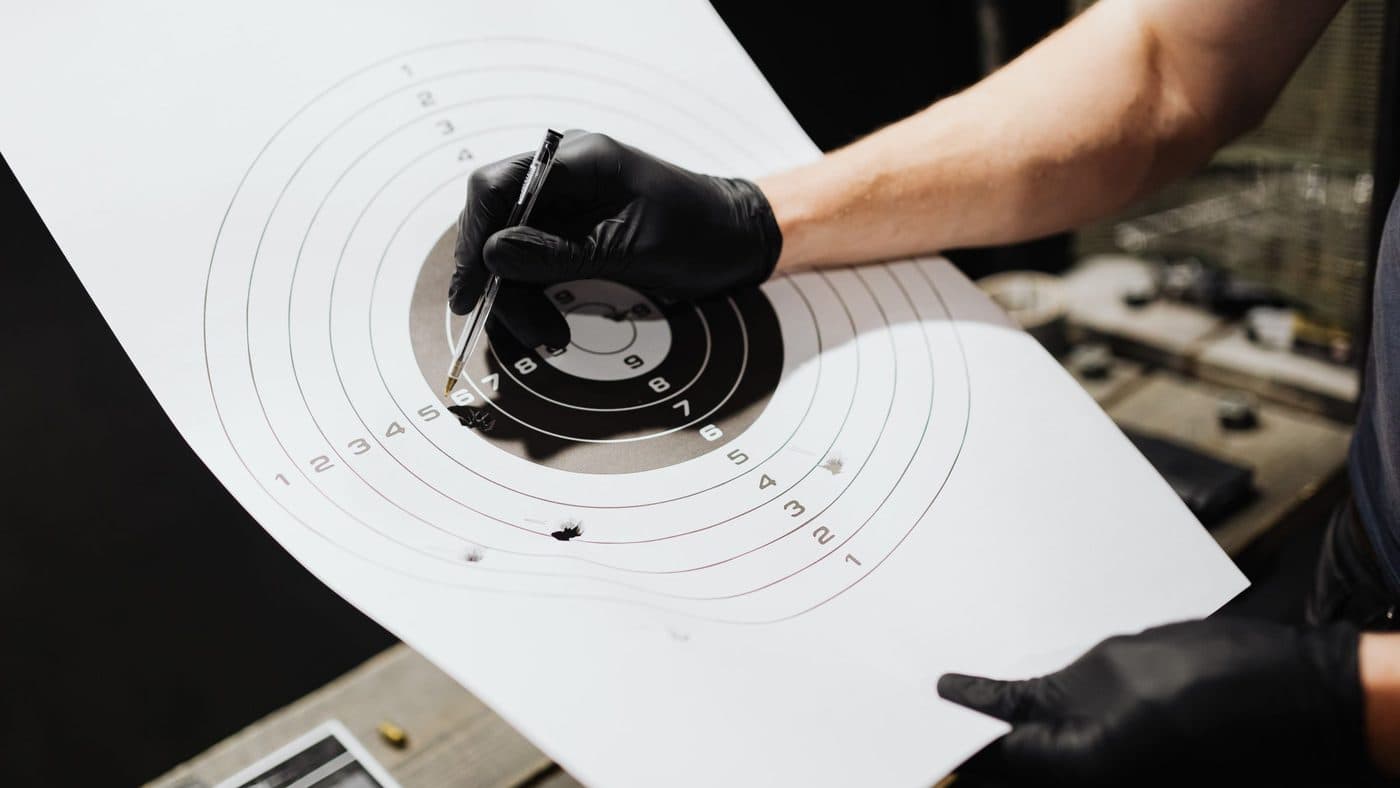
What should you bring to the shooting range for the first time?
Bring impact-rated eye protection, hearing protection, your firearm in a locked or secure case, the correct ammunition and a bag to keep it all together. Snap caps are a useful extra for practice at home. Call the range first, because rules, rentals and ammunition restrictions vary.
About the links in this article
New students often ask what they should buy first. The honest answer is less than you think. A good first kit protects your eyes and ears, keeps your firearm secure and fits in one bag. Everything else can wait until you've had some training.
First range kit checklist
- Eye protection: impact-rated glasses, even at an indoor range
- Hearing protection: earmuffs, earplugs or both
- A locking case: for your firearm on the way there and back
- Correct ammunition: matched to your firearm, and allowed by the range
- Snap caps: inert rounds for dry practice at home
- A range bag: so everything stays together
- ID and any required paperwork: ask the range what it needs
If you don't own a firearm or gear yet, ask the range about rentals before you buy anything. Plenty of people start that way. Our short guide to buying and selling firearms is worth reading before you shop.
1. Eye protection
Ordinary glasses and sunglasses aren't the same as safety glasses. Look for eyewear marked to the ANSI Z87.1 impact standard, and check the mark on the frame itself rather than trusting the packaging.
What I use: a Field & Stream kit with different colored lenses that can be changed out. It's a cool setup, and it means one frame covers different conditions. A clear lens works indoors, and a tinted lens works in bright sun. I couldn't find that exact kit on Amazon. The closest match I found is Walker's Sport Glasses with 4 lenses, which come with clear, smoke gray, amber and yellow lenses. For a low-cost start, the Field & Stream Eye & Ear Protection Kit bundles glasses, earmuffs and foam plugs, though it isn't the kit I own and it doesn't have swappable lenses. Check for the Z87 rating before you buy either one.
2. Hearing protection
This is the item people underestimate. NIOSH reports that peak noise from gunfire at indoor ranges can exceed the 140 dB occupational limit. Wear protection the whole time you're on the range, including while someone else is shooting.
NIOSH recommends earplugs and earmuffs together for people who use ranges for work, such as law enforcement officers. Doubling up is a sensible habit for anyone at an indoor range. It also warns that glasses worn under earmuffs can break the seal, so look for thin temples and check the fit.
What I use: Walker's ear protection. A popular model to look at is the Walker's Razor Slim Electronic Muff.
3. A locking case
You need a secure way to get your firearm to the range, and it helps to have one at home and on the road too. A portable safe gives you a place to lock your firearm in a car, at a hotel or anywhere else you can't keep it on you.
What I use: a Vaultek portable safe that's waterproof and floats. The Vaultek LifePod 10 is listed as airtight and able to float, and it has a built-in lock.
A case doesn't settle the legal question by itself. Transport rules differ by state, so check them before you leave. Our Transporting a Firearm course covers vehicles, planes, state lines and hotels, and Firearm Security & Storage covers keeping it secure at home. If you travel with a firearm, our multi-state permit guide is the next step.
4. Snap caps
Snap caps are inert dummy rounds. They let you practice loading, unloading and your trigger press at home, without live ammunition. Some firearms shouldn't be dry-fired without them, so check your owner's manual.
What I use: honestly, whatever is handy. The brand doesn't matter much. Just buy the right caliber. If you shoot 9mm, these S.T. Action Pro 9mm snap caps are a 10-pack. If you're new to the fundamentals, Handgun Marksmanship Fundamentals shows what to work on.
Before any dry practice
5. A range bag
A dedicated bag keeps your eyes, ears, ammunition and accessories in one place, so nothing gets left at home on range day. It doesn't need to be a bag made for the range. It only needs to be big enough and easy to keep organized.
What I use: Vertx bags, whenever I can. For a smaller bag, look at the Vertx Urban Ghost 10L sling. If you carry more, there's the Vertx Gamut 22L sling.
What to wear to the range
- Closed-toe shoes, because hot brass lands on the floor
- A higher neckline, because hot brass can go down a low-cut shirt
- A hat with a brim, if you have one, to help deflect brass
- A sturdy belt, if you'll be using a holster. Our Holster Selection course can help you choose one
Before and after your range trip
- 01Call the range. Ask about rentals, ammunition restrictions, holster rules and whether you need a safety briefing.
- 02Learn the rules first. Our Range Safety & Etiquette course and Firearm Safety Rules cover what you'll be expected to know.
- 03Tell the staff you're new. They would much rather answer a question than correct a mistake.
- 04Wash up afterward. NIOSH advises washing your hands and face after shooting and before you eat, drink or smoke, because lead can transfer to your skin.
- 05Clean and store your gear. Maintenance & Cleaning of Handguns covers the basics.
What to skip for now
Don't buy a pile of accessories before you've had some training. Lights, optics and upgrades can wait. Your first few lessons will show you what you actually need, and that can save you from buying the wrong thing. If you're choosing how to learn, here's how private training compares with a public CPL class.
New to firearms?
I teach private lessons in Southeast Michigan, including for people who have never handled a firearm. Ask me what to bring before your first lesson.
See private trainingCommon questions about a first range kit
Can you rent eye and ear protection at a shooting range?
Many ranges rent or sell eye and ear protection, but it varies, especially at outdoor ranges. Call ahead. If you plan to go more than once, owning your own gear is usually worth it because you'll get a better fit.
Are regular prescription glasses enough at the range?
Don't assume they are. Look for eyewear marked to the ANSI Z87.1 impact standard. If yours aren't, ask your eye doctor about impact-rated lenses or wear safety glasses designed to fit over them.
Should you wear earplugs and earmuffs together?
It's a smart habit at indoor ranges. NIOSH recommends double hearing protection for people who use firing ranges for work, because gunfire indoors can be extremely loud. Either way, make sure whatever you wear fits properly.
What are snap caps used for?
Snap caps are inert dummy rounds used to practice loading, unloading and trigger control without live ammunition. They have no primer or powder. Always confirm your firearm is unloaded and keep live ammunition out of the room when you practice.
What should you avoid wearing to a shooting range?
Avoid open-toed shoes and low-cut tops, because ejected brass is hot and can land on your skin. Closed-toe shoes and a higher neckline are the simple fix.
Keep learning
- Handgun Owner Foundations Bundle
All 12 short courses in one package
- How much does a Michigan CPL cost?
- Michigan CPL requirements
- Where you can't carry in Michigan
Best value: 12 courses, one price
Your permit class covered the basics. Who covered the rest?
Can you say what to do at a traffic stop, where your permit stops counting, and how your firearm must be stored on a road trip? If any of that made you pause, this is your refresher.
$49.99 for all 12, about $4.17 a course
Save at least $59.90 over buying them one at a time at $9.99 each, and Loading & Unloading Handguns is only available here. All 12 are online, 3 to 4 hours in total, on any device, and your progress is saved.
Educational courses from U.S. LawShield. They don't replace your state's licensing requirements.
After the decision
If you carry away from home, who do you call afterward?
Training and permits prepare you for the decision itself. They don't cover what follows a defensive incident, which could happen in a state far from home: investigation, charging decisions, and the civil claim that can arrive much later.
Legal-defense memberships exist for that part. Whether one is worth it to you is a real question, and it's worth understanding before you decide either way.
U.S. LawShield is an independent company. We're one of their instructor partners and may be compensated for referrals.
Sources
- NIOSH — Preventing Occupational Exposures to Lead and Noise at Indoor Firing Ranges (PDF)
Peak gunfire noise, double hearing protection and lead hygiene
- Project ChildSafe — Six Keys to Proper Etiquette at the Range
Keep reading